Cold War history · Nuclear deterrence

Thirty-four years on alert: how Strategic Air Command's bombers held the nuclear line

Guardians of the Sky: How SAC's Bombers Held the Nuclear Line, 1957–1991

by Daniel Hartwell

Between 1957 and 1991, Strategic Air Command's bomber force stood between a fragile peace and the possibility of nuclear war. This book follows the aircraft, crews, alert facilities, command networks, and procedures that made nuclear deterrence credible, from the fifteen-minute warning problem to the final end of the Cold War. It is a practical guide to one of the most consequential and dangerous institutions of the modern era, told through the people and machinery who carried it.

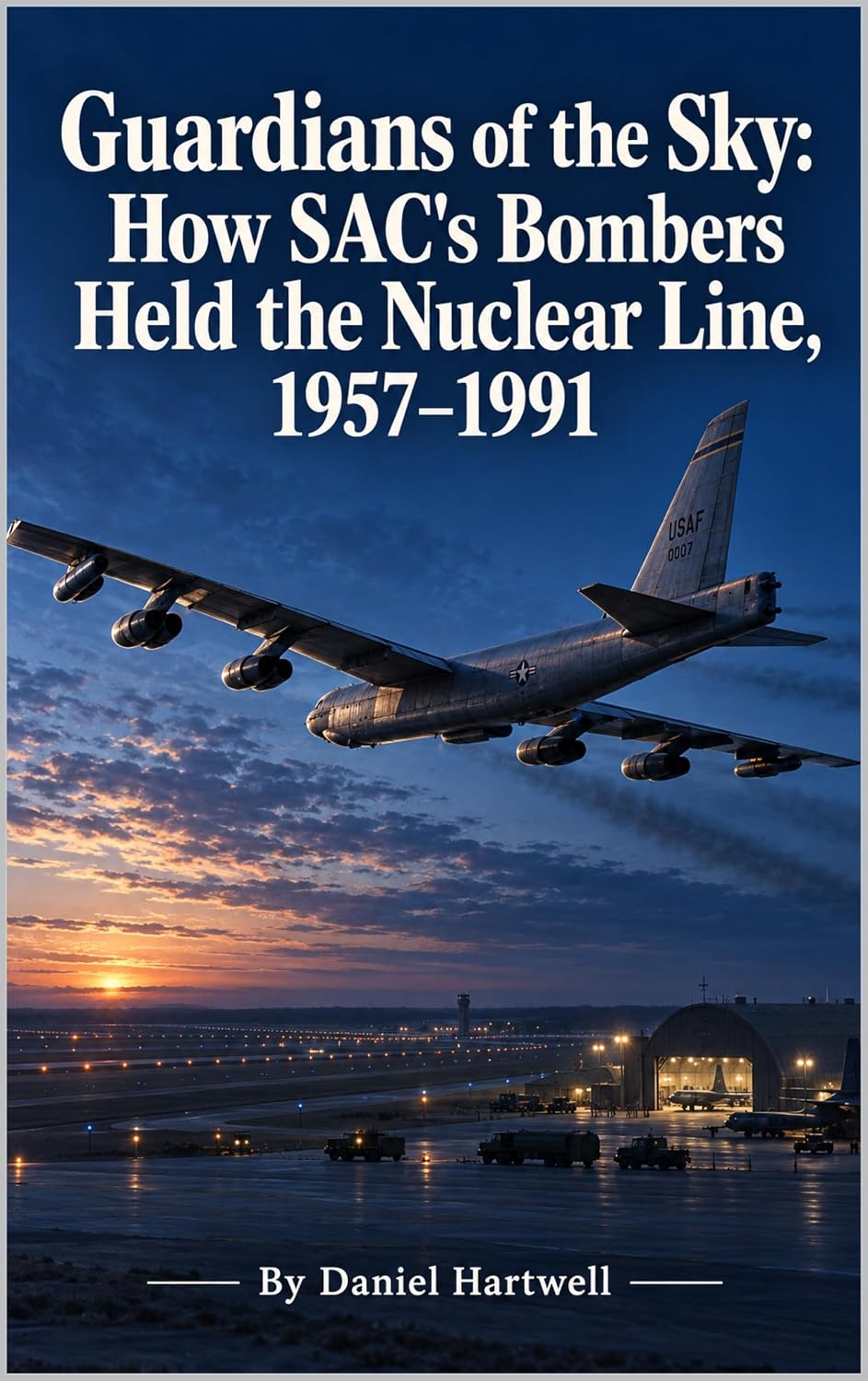
Book cover of Guardians of the Sky: How SAC's Bombers Held the Nuclear Line, 1957–1991 by Daniel Hartwell
The authentic cover of the book

Inside the book

What this book explores

The fifteen-minute warning problem

Why did Strategic Air Command's alert system exist at all? Because once intercontinental attack became possible, the time available to decide how to respond collapsed to minutes. The book explains how bomber readiness, overseas basing, and warning networks were built around that constraint.

From B-47 to B-52: the backbone of the force

The B-47 was fast, heavily committed overseas, and increasingly difficult to sustain. The B-52 became the backbone of SAC's bomber force, and its endurance, payload role, and basing shaped how the nuclear mission was carried out for decades.

Life inside an alert facility

What daily life looked like where crews waited for orders that might never come: the routines, the inspections, the training, and the quiet psychological weight of standing nuclear alert.

Operation Chrome Dome

How nuclear-armed bombers were kept airborne around the clock as a hedge against surprise attack, and why that airborne-alert program created new dangers of its own.

Fail-safe and the prevention of accidental war

How layered authorization, communications, and command procedures were designed to prevent unauthorized or accidental war, and where those safeguards were tested by real events.

Crisis, accidents, and change

What happened during the Cuban Missile Crisis and the tense transition to DEFCON 2, how the accidents at Goldsboro, Palomares, and Thule exposed hidden vulnerabilities, and how SIOP planning, airborne command posts, missiles, and the Vietnam era reshaped SAC's mission.

The approach

Why a reader would choose it

Most accounts treat nuclear deterrence as an abstract policy. Guardians of the Sky does the opposite: it shows the human and mechanical system behind it, the bomber crews who trained for impossible decisions, the aircraft that had to remain ready, and the layers of command intended to keep catastrophe from beginning.

The book is equally honest about the system's limits. It examines where procedures nearly failed, where accidents revealed vulnerabilities that peacetime confidence had hidden, and why the bomber alert structure changed as technology and strategy evolved between 1957 and 1991.

The result is an accessible account of the Strategic Air Command bomber alert system and Cold War nuclear deterrence, written for readers who want to understand how the line actually held, not just that it did.
Is it for you?

Who this book is for

Readers of Cold War history

If the standoff itself is your subject, this book follows its operational core: how readiness, alert, and command actually worked between 1957 and 1991.

Military aviation enthusiasts

From the B-47's overseas commitments to the B-52's decades as the backbone of SAC's bomber force, the aircraft are treated as working machines inside a living system.

Students of nuclear strategy

SIOP planning, fail-safe design, airborne command posts, and the shift toward missiles are explained as parts of one deterrence system, in accessible language.

Readers drawn to the human story

Crews waiting in alert facilities for orders that might never come are at the center of this account, and their routines and pressures give the strategy its human scale.

Answers first

Reader questions about SAC's bombers and the nuclear line

How did Strategic Air Command bomber alert work during the Cold War?

In outline, SAC's bomber alert system combined aircraft kept ready on the ground or airborne, alert facilities where crews lived beside their aircraft, command networks that carried warning and orders, and launch procedures rehearsed against short warning times. The book explains how readiness, warning time, and command authority fit together, using only documented history. Guardians of the Sky walks through each layer of that system, from the fifteen-minute warning problem to the procedures crews actually trained on.

Why was the B-52 central to SAC's nuclear deterrence mission?

The B-52 became the backbone of SAC's bomber force because its endurance, payload, and basing flexibility let it carry the nuclear alert mission for decades while newer designs came and went. Guardians of the Sky describes the B-52's role within the broader force: how it sustained the alert posture, what its operations demanded, and why it outlasted the B-47, which was fast and heavily committed overseas but increasingly difficult to sustain.

What was Operation Chrome Dome and why was it controversial?

Operation Chrome Dome was SAC's airborne-alert program, in which nuclear-armed bombers stayed airborne around the clock as a hedge against surprise attack. Its purpose was to keep a survivable strike option ready at all times. It was controversial because keeping nuclear-armed aircraft continuously flying created serious safety and accident risks, risks that became real in the accidents at Goldsboro, Palomares, and Thule.

How did fail-safe procedures reduce the risk of accidental nuclear war?

Fail-safe procedures layered authorization, communications, and command-and-control safeguards so that no single accident, error, or rogue decision could start a nuclear war. Guardians of the Sky explains how those procedures were designed and how they were meant to work. The book is also careful about the limits: fail-safe was deterrence design, not a guarantee that the system was risk-free.

What role did SAC play during the Cuban Missile Crisis?

During the Cuban Missile Crisis, SAC moved to a heightened readiness posture, including the tense transition to DEFCON 2, with dispersal and alert activity across the bomber force. Public records support that broad account of readiness and posture; they do not support every claim that circulates about the crisis. Guardians of the Sky sticks to what the documented record shows and is explicit about those limits.

What did daily life look like for a SAC bomber crew on alert?

Alert life was built around waiting: crews lived in alert facilities beside their aircraft, ran through training and inspections, rehearsed launch procedures, and coordinated as a team, all under the psychological pressure of knowing what their orders would mean. Guardians of the Sky describes those routines and that atmosphere through documented histories of the alert force.

How did Goldsboro, Palomares, and Thule expose nuclear-alert vulnerabilities?

Each accident showed a different weakness in keeping nuclear weapons on constant alert: an aircraft breaking up in flight over North Carolina, a midair collision and weapons lost near Palomares in Spain, and a crash at Thule in Greenland. Together they revealed how ordinary operational risk could touch nuclear weapons, shaped safety procedures and public understanding, and fed the eventual change in alert policy. The book compares their circumstances and consequences without sensationalizing them.

How did Strategic Air Command's bomber mission change from 1957 to 1991?

Over those thirty-four years, the force moved from the B-47 era to the B-52 as its backbone, alert structures matured and then adapted after accidents and crises, airborne command posts and missiles reshaped command of the mission, and Vietnam-era demands stretched SAC's resources, until the end of the Cold War closed the alert era. Guardians of the Sky traces that whole arc, from the fifteen-minute warning problem to the final stand-down.

Book cover of Guardians of the Sky: How SAC's Bombers Held the Nuclear Line, 1957–1991 by Daniel Hartwell

Book and author

Guardians of the Sky: How SAC's Bombers Held the Nuclear Line, 1957–1991

by Daniel Hartwell

Author
Daniel Hartwell
Subject
Strategic Air Command bombers and Cold War nuclear deterrence, 1957–1991
Publication date
September 28, 2026
Genre
Cold War history · military aviation · nuclear strategy
ASIN
B0HLBDWR66
Book cover of Guardians of the Sky: How SAC's Bombers Held the Nuclear Line, 1957–1991 by Daniel Hartwell

Understand the system that held the line

The peace of the Cold War was not abstract. It was maintained by aircraft, alert facilities, command networks, and thousands of crews. Guardians of the Sky tells how that system worked, where it was tested, and why it mattered, from 1957 to 1991.

View the book on Amazon